More coverage is not automatically a stronger presence.
The case describes an impulse channel facing declining gum consumption, an outdated coverage model, competitive pressure from Wrigley’s, and a constrained sales force. Spreading the same attention across every store can dilute the relationships and visibility that matter.
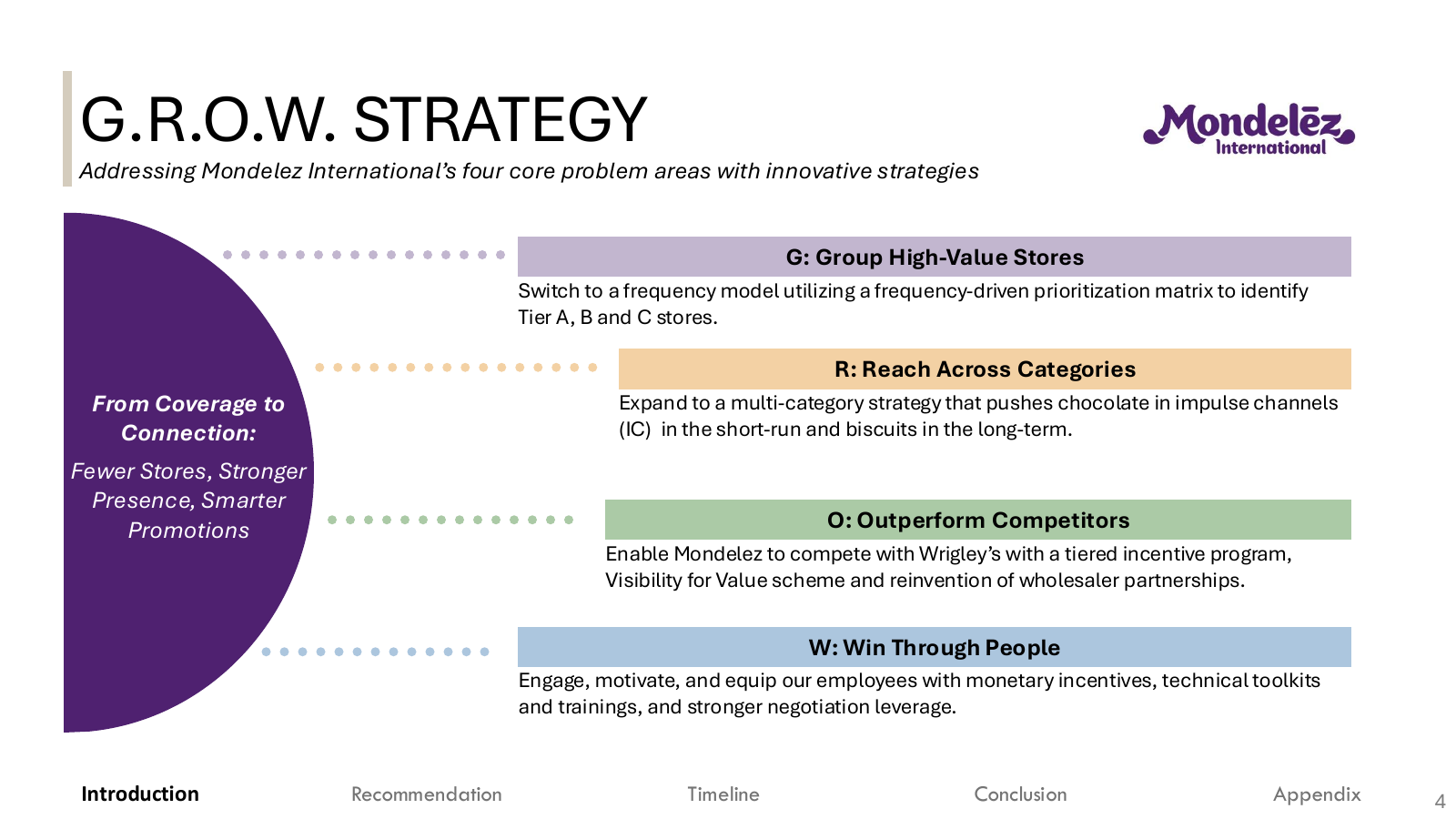
The team’s central recommendation is to move from broad coverage to focused, relationship-driven execution. G.R.O.W. links store prioritization, category expansion, competitive incentives, and employee support so that route changes are reinforced by the rest of the commercial model.
“From coverage to connection: fewer stores, stronger presence, smarter promotions.”Original presentation · slide 4
The choices behind
the recommendation.
Group high-value stores using an explicit prioritization model.
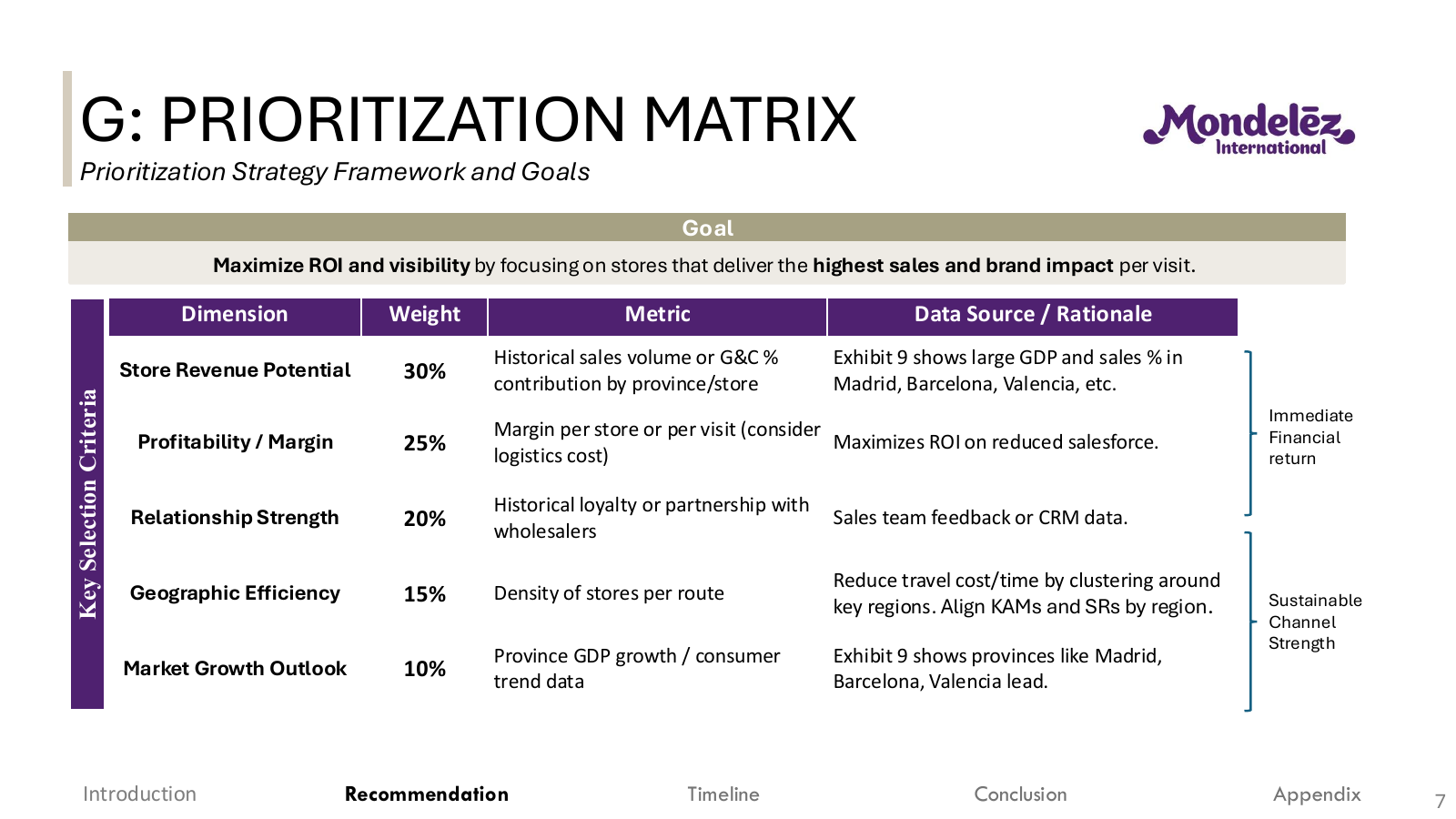
The proposed matrix weights revenue potential at 30%, margin at 25%, relationship strength at 20%, geographic efficiency at 15%, and market growth at 10%. Stores are scored and grouped into A, B, and C tiers, with a pilot before broader rollout.
Concentrating visits can weaken lower-tier relationships. The deck proposes digital touchpoints, rotational visits, and wholesaler support to keep those stores connected.
Reach across categories while defending the core.
The proposal adds chocolate in the short term and biscuits later, using the wider sweet-snacking portfolio to increase relevance to stores and wholesalers. Gum remains the anchor category rather than being abandoned in the expansion.
Category breadth can dilute focus. The plan calls for distinct targets and a staged expansion so core gum performance remains visible.
Compete for verified visibility and make the change usable.
The O in G.R.O.W. combines tiered incentives, visibility-for-value, wholesaler partnerships, and retail branding. The W focuses on engagement, motivation, and equipment: communication loops, recognition, incentives, CRM, training, and a store playbook.
Cash incentives can trigger price competition, and repeated changes can fatigue the sales team. The deck pairs limits on incentive spending with recognition, feedback, and practical frontline support.
A commercial strategy with execution and risks attached.
The team produced a 34-slide presentation containing the recommendation, decision criteria, a store-prioritization model, a proposed six-month implementation plan, financial scenarios, risks, and supporting appendices. Osayd Asif is credited as one of the four team members.
This case demonstrates a structured route from a channel problem to decisions about stores, categories, incentives, and people. The revenue, margin, productivity, and ROI figures in the deck are modeled projections or goals. They are not verified improvements delivered to Mondelēz.
How to test the recommendation
- Pilot the frequency model in a small set of provinces before national expansion.
- Track leading indicators such as visits, shelf presence, and promotion compliance alongside sales and margin.
- Re-score stores using sales and frontline feedback, and check whether lower-tier relationships are weakening.
The full thinking,
in the original deck.
Explore the presentation behind this case, including the recommendation, supporting detail, and assumptions.
Read the original deck (PDF)